View all filters
Clear








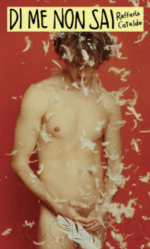
Di me non sai
Lucio falls in love with "the boy" even before meeting him: just watching him from the window of his office is enough for him to become almost obsessed. When they finally meet, he discovers that Davide is much younger than him (still studying), and that he is elusive, unreliable, and "cruel" in the way only twenty-year-olds can be cruel.
For two months, Lucio and Davide have dinner together, have sex, go to the beach, and often sleep at Lucio's place. However, Davide does not fall in love. He continues to seek Lorenzo, the only man he (perhaps) truly loved, of whom he keeps only a pixelated photo on an old cellphone. Like many twenty-year-olds, he is also confused, wounded, and willing to nestle into the routine of always having a Coca-Cola ready for him in the refrigerator.
"Di me non sai" tells the story of a relationship lived in an opposite, incompatible way, whose nature is revealed to the reader only as the novel progresses. Alternating the perspectives of the two protagonists in short, sometimes very short chapters, Raffaele Cataldo shows the misalignment of feelings and the painful consequences it can have, the slow pace of hot Apulian summers, and the obsessive loves (present and absent) that, like wild oat seeds, cling to hair, shoes, and clothes.
Written in Italian by Raffaele Cataldo
4 minutes read
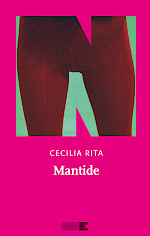
Kudlanka
Mie je dvacet šest let a každý den se probírá hrůzami světa: pracuje jako moderátorka obsahu a musí cenzurovat ta nejbrutálnější videa, která kolují po internetu. Od chvíle, kdy její bývalý přítel Ruben zemřel po zásahu elektrickým proudem ve vaně, se točí v kruhu nihilismu a výčitek, otupělá svou prací i psychofarmaky, ožívající jen občas díky přátelství s Dennisem a Miriam. Minulost s Rubenem je archivem krutých vzpomínek, podobně krutých jako obrazy, které musí odstraňovat z internetu, ale vzpomínky ze své paměti vymazat nedokáže: jeho citové vydírání, když ji obviňoval, že ho užírá jako kudlanka, strach z toho ho opustit. Když však narazí na video Sofie, dívky, která se jí podobá a která skočí z mostu, Mia se probere a rozhodne se jít po dívčiných stopách: setká se s jejím přítelem Lapem, vycházející hudební hvězdou, i s její kamarádkou Margot, eskort pracovnicí a tanečnicí v nočním klubu, a oběma podlehne v jakési vířivé hře zrcadel. Nakonec se Mia spolu s Miriam a Margot rozhodnou dát si šanci na jinou cestu, v paktu sesterství mimo zaběhlé normy, který dokáže rozlousknout skořápku její bolesti. Kudlanka (Mantide) vypráví příběh mladé ženy, která vzdoruje ztrátě i samotě, bouří se proti po generace předávanému pocitu ženské viny a směřuje vpřed, ke světlu svého budoucího já.
Translated from
Italian
to
Czech
by Anna Kostková
Written in Italian by Cecilia Rita
8 minutes read
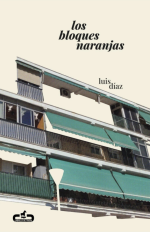
Oranje blokken
Translated from
Spanish
to
Dutch
by Lies Doms
Written in Spanish by Luis Díaz
9 minutes read
Synopse
Translated from
Italian
to
Czech
by Monika Štefková
Written in Italian by Arianna Giorgia Bonazzi
4 minutes read
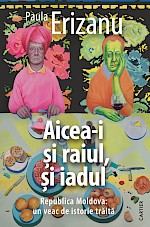
Măi, fetelor (It’s Both Heaven and Hell Here. Moldova: a Century of Lived History)
There are few places across Europe which have had the tumultuous story of Moldova in the 20th and 21st centuries. My greatgrandmother, for instance, spent most of her life in the same village while living in four different countries: she was born in the Russian Empire, went to school in Romania, resisted collectivisation and eventually gave in during the Soviet era, and got retired in the independent Republic of Moldova. I share her story in this book, as well as stories of other people with different backgrounds I interviewed, in an effort to create a polyphonic view of Moldova’s recent history. Chronologically, the book starts with the 1903 infamous Chisinau pogrom and it ends with the 2022 refugee crisis caused by the full-scale invasion of Ukraine. Geographically, the stories are rooted in Moldova but they cover the whole world thanks to the processes of migration that characterised all of the communities described in this book — Jewish, Roma, Armenian, Moldovan, Ukrainian, Russian etc. — at different points during history.
Written in Romanian by Paula Erizanu
7 minutes read
Fios
Translated from
Dutch
to
Portugese
by Lut Caenen
Written in Dutch by Hannah Roels
8 minutes read
De metro
Translated from
Romanian
to
Dutch
by Jan Willem Bos
Written in Romanian by Cătălin Pavel
9 minutes read
Hele, holky (It’s Both Heaven and Hell Here. Moldova: a Century of Lived History)
Translated from
Romanian
to
Czech
by Klára Našincová
Written in Romanian by Paula Erizanu
6 minutes read
Iskreno, ljubica, briga me
Translated from
Czech
to
Slovenian
by Vesna Dragar
Written in Czech by Lucie Faulerová
7 minutes read
Помаранчеві блоки
Translated from
Spanish
to
Ukrainian
by Oleksandra Laktionova
Written in Spanish by Luis Díaz
7 minutes read
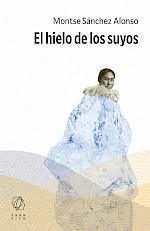
Thuis in het ijs
Translated from
Spanish
to
Dutch
by Lies Doms
Written in Spanish by Montserrat Sánchez
9 minutes read
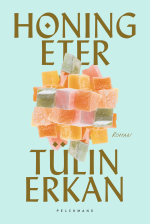
ARRIVALS / GELIȘ (Mangiamiele)
Translated from
Dutch
to
Italian
by Matilde Soliani
Written in Dutch by Tülin Erkan
7 minutes read
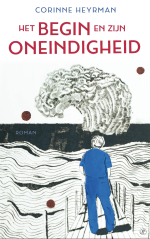
Začetek in njegova neskončnost
Translated from
Dutch
to
Slovenian
by Tina Jurman
Written in Dutch by Corinne Heyrman
8 minutes read
Pekel
Translated from
Dutch
to
Slovenian
by Ariela Herček
Written in Dutch by Aya Sabi
7 minutes read
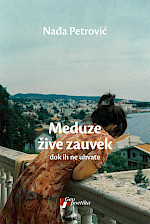
Las medusas viven para siempre hasta que las capturan
Sara acaba de cumplir diecinueve años y, debido a un trauma de su pasado, siente un creciente miedo a morir ese año. Por eso, lo que debería ser el verano más despreocupado de su vida, entre el instituto y la universidad, lo pasa bajo la sombra de la ansiedad. Sale con sus amigos por pubs alternativos, intenta reconciliarse con su exnovio Viktor, bebe en exceso y quiere llamar la atención de todo el mundo aunque, en el fondo, es una persona introvertida. Todo cambia después de que Sara tenga su primera visión en una sala oscura de una discoteca, en el que se despierta un trauma del pasado: vuelve a encontrarse con su prima de diecinueve años, Lara. Sara se despierta a la mañana siguiente con un hormigueo en la mano; este se extiende y Sara descubre que padece una enfermedad sin nombre, con la que vivirá con normalidad, pero que la acompañará para siempre. Sara, al recibir la primera señal de que su miedo a la muerte está justificado, empieza a entrar en pánico, analizando el concepto y su propio cuerpo como algo frágil y efímero y, por medio de estos pensamientos, madura rápidamente. Empieza a prepararse para la pintura cuando conoce a Tisa y Balša, ambos son excéntricos y han hecho frente a la muerte en el pasado, y tanto una como otro tienen traumas enterrados. A través de su relación con ellos, Sara se enfrenta con su presente, futuro y pasado: la tragedia familiar, que marcó todo el período de su paso a la madurez, la muerte de su prima Lara.
Translated from
Serbian
to
Spanish
by Miguel Alonso
Written in Serbian by Nađa Petrović
12 minutes read
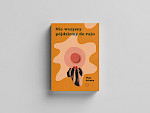
Nie wszyscy pójdziemy do raju
“Not All of Us Will Go to Paradise” is an anti-road-trip and anti-coming-of-age novel. With effortless audacity and a keen awareness of its own genre boundaries, it portrays coming out as a journey—through memory, shame, class, religion, and the body. The narrator returns to the 1990s and early 2000s: to the world of VHS tapes and 00’s music, yet this cultural veneer crumbles beneath the weight of individual experience. With remarkable acuity, Górska reconstructs the landscape of Poland's post-transformation years, when the promise of a better life shaped both public imagination and private longing. It is a meditation on language itself: on how much it makes possible, how much it withholds, how deeply it can wound, and how ecstatically it can liberate.
Górska is not writing a manifesto. She is writing about experience: sensual, painful, amusing, and shameful—and about a language that trembles, just as the body trembles.
“Not All of Us Will Go to Paradise” is a hauntological expedition into the recent past, and a brilliant narrative reminding us that stepping out of the shadows does not always mean immediate salvation.
Written in Polish by Olga Górska
6 minutes read
Francamente, querida, me importa un bledo
Translated from
Czech
to
Spanish
by Daniel Ordóñez Franco
Written in Czech by Lucie Faulerová
8 minutes read
Residence
Translated from
Italian
to
Romanian
by Nicoleta Iolanda Rus
Written in Italian by Maurizio Amendola
10 minutes read
Všichni lidé bratry budou
Translated from
Dutch
to
Czech
by Veronika Horáčková
Written in Dutch by Yelena Schmitz
7 minutes read
Torcidos
Written in Spanish by Matías Candeira
7 minutes read