Connecting Emerging Literary Artists (CELA) is a talent development project for the new generation of European literary voices across 11 different countries.
About
CELA brings together 165 literary artists across 11 European countries, bridging the gaps between emerging talent, the publishing industry, and European audiences.
Upcoming
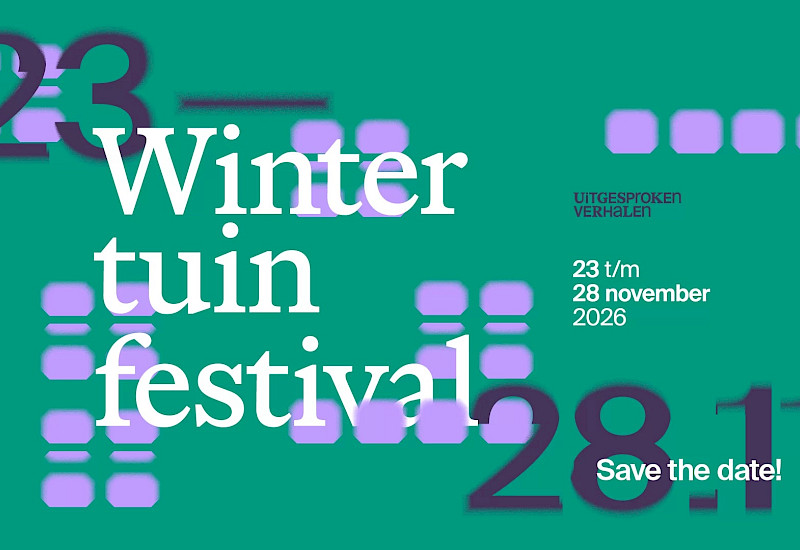
23 November – 28 November 2026
Wintertuinfestival 2026
From 23 to 28 November 2026, Nijmegen fills with outspoken stories. For six days, Wintertuinfestival brings literature, performance, art, music and unexpected encounters to the heart of the city.
Published 25 Nov 2026
Looking closer, looking ahead
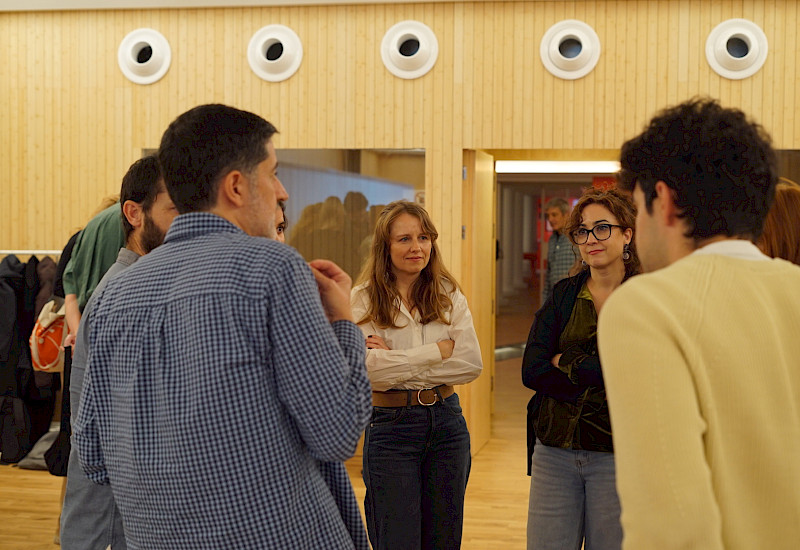
Reflections on Festival Eñe — by Alina Petryk, translator from Ukrainian into Spanish
On 18 November, my birthday, I board a train from Barcelona to Madrid. There is something rather lovely about travelling towards people you are looking forward to seeing on a day like this. Before the festival begins, I have a few hours to spend with my translation buddy, Oleksandra Laktionova. She translates from Spanish into Ukrainian; I translate in the opposite direction. Somewhere between our two languages, we have built a friendship — one of the unexpected gifts of this edition of CELA.
Madrid welcomes us with rain. By now, I am beginning to suspect that rain is an unofficial part of the CELA programme. Madrid last year, Brussels, Turin, my recent trip to Kraków for the Conrad Festival: sooner or later, there is always an umbrella involved. Perhaps this is simply how we recognise a reunion.
This year, I am attending Festival Eñe with an additional role: alongside participating as a translator, I am documenting our time together. It changes the way I pay attention. I am listening to a conversation while also thinking about how to share it with someone who is not in the room. I find myself noticing expressions, small gestures, the atmosphere around a table. How do you capture what it feels like to be here?
Thursday, 19 November, gives me plenty to work with. The Spanish CELA team has a full day ahead, beginning with a meeting about social media, followed by a presentation of FWD, the new project building on CELA, with publishers and the translators who have received FWD grants.
Then comes the part that makes my stomach tighten: meeting Spanish publishers and pitching the books we have translated.
For those of us who are more comfortable choosing words quietly at a desk, introducing a book in a few persuasive minutes is quite a challenge. How do you convey its voice, its world, and everything that made you want to translate it? How do you do justice to a whole novel when you can already feel your carefully prepared sentences slipping away?
But once I start talking about the books, something shifts. My enthusiasm gives me something firmer to hold on to than my nerves. I want these stories to reach readers. I want the publishers standing opposite me to understand why they matter. For a while, that desire is stronger than my shyness.
Lunch on Paseo de la Castellana offers a welcome pause: good food, familiar faces, and time to let the morning’s conversations settle. Being together around a table is one of my favourite parts of these encounters. There is always another conversation to join, another person’s news to catch up on.
In the afternoon, we gather for a round table about translation. We talk about the supposedly untranslatable, about mistakes we have made, and about the translator’s role as a literary scout: finding books, championing writers, and trying to create opportunities for their work in another language. The conversation grows particularly animated around bestsellers, commercial success, and literary quality — and the assumptions we make about how they relate to one another.
There are fewer people in the audience than we would have hoped. Still, surrounded by our fellow participants, we feel at ease. There is room to disagree, laugh, admit uncertainty, and recognise our own experiences in someone else’s words. It feels like a conversation among family.
The most moving event comes later, when writers and their translators share the stage. We listen to excerpts in the original language and then in translation, and hear about the exchanges and decisions behind them.
I love these moments. A text you have been discussing suddenly becomes a voice in the room. Then another voice takes it up in another language. Listening to the readings and to the conversations between each writer and translator, I am reminded of how much of our work happens through a relationship: questions asked, meanings negotiated, trust gradually built.
Documenting the event makes me especially aware of the difficulty of holding on to it. I want to share the readings, but also the attention with which people listen to one another. Some of what makes the evening special is difficult to fit into a photograph or a short video.
By dinner, the day seems to have passed almost impossibly quickly. We have been talking since morning, yet there is still more to say. This is also a farewell to this edition of CELA, and eventually the conversations give way to hurried goodbyes, promises to meet again, and last-minute exchanges of phone numbers with people we have only just got to know.
I leave Madrid thinking about the books I presented to publishers. I hope those conversations will continue, and that new Ukrainian voices will find their way onto Spanish bookshelves. After spending so much time with these works, I would love to see readers discover them for themselves.
For now, I carry home the pleasure of having spent my birthday with a friend, the warmth of our reunion, and the feeling that there are still many conversations ahead.
Published 18 Nov 2026
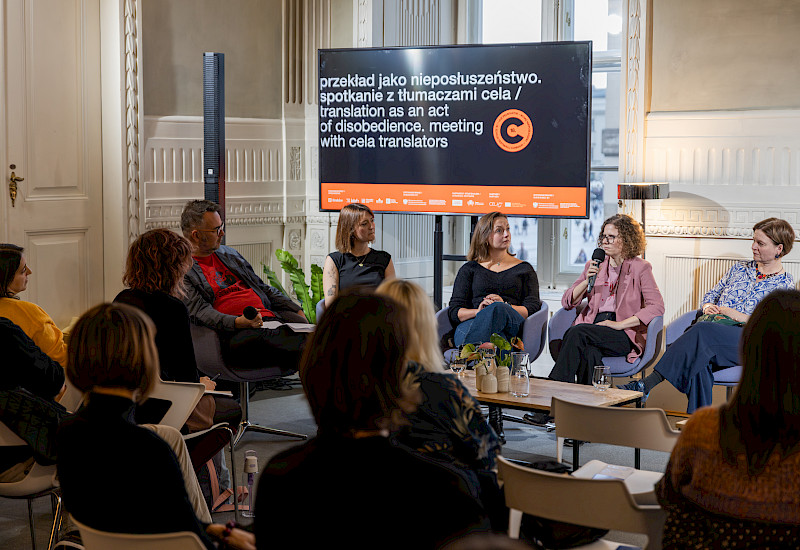
Translation as an act of disobedience
Reflections about Conrad Festival – by Justyna Sterna (translator ES – PL)
Published 14 Jul 2026
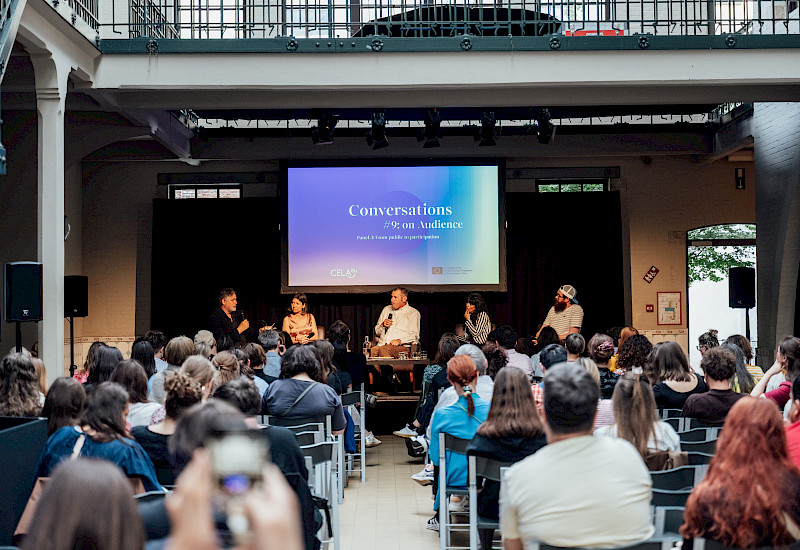
The audience will always be there
Conversations #9: On Audience – by Lieke Vervuren, NL
Published 1 Jul 2026
The beginning of the year
CELA Job Shadowing: Scuola Holden – by Alejandro Marcos (Escuela de Escritores)
Dive into our portals
Discover the work of our translators and writers via eight dynamic portals, each offering a journey into a curated selection of translated stories. These portals offer various interesting themes—identity, migration, belonging, language, magic, and resistance—creating a space for cross-cultural dialogue. By bridging linguistic and national boundaries, CELA’s publications celebrate the richness of European storytelling, offering new perspectives that connect us all today.
Portal of the month
Una declaración de dependencia
Translated from
Dutch
to
Spanish
by Guillermo Briz
Written in Dutch by Rebekka de Wit
9 minutes read
Kraj
Written in Serbian by Jasna Dimitrijević
8 minutes read
De metro
Translated from
Romanian
to
Dutch
by Jan Willem Bos
Written in Romanian by Cătălin Pavel
9 minutes read
Een paar verdwaalde minuten
Translated from
Romanian
to
Dutch
by Charlotte van Rooden
Written in Romanian by Cristina Vremes
10 minutes read
All portals
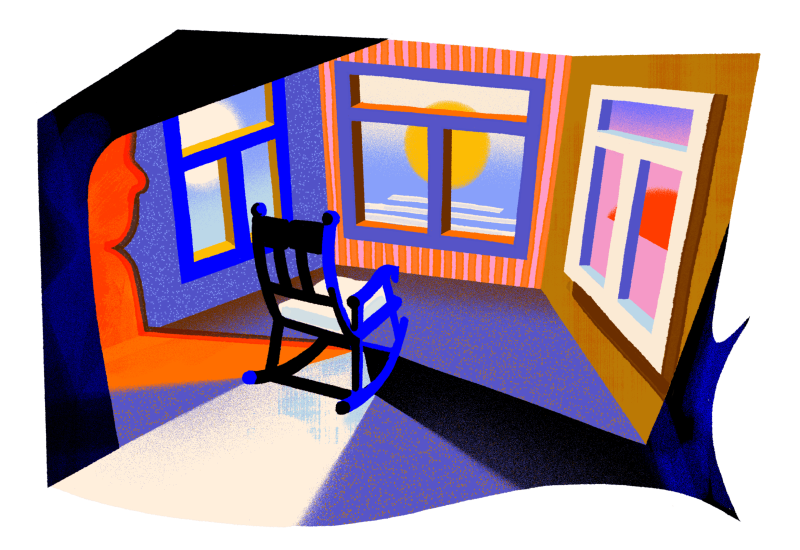
Time After Time
Explore or alter the physics, the histories and the inevitability of time
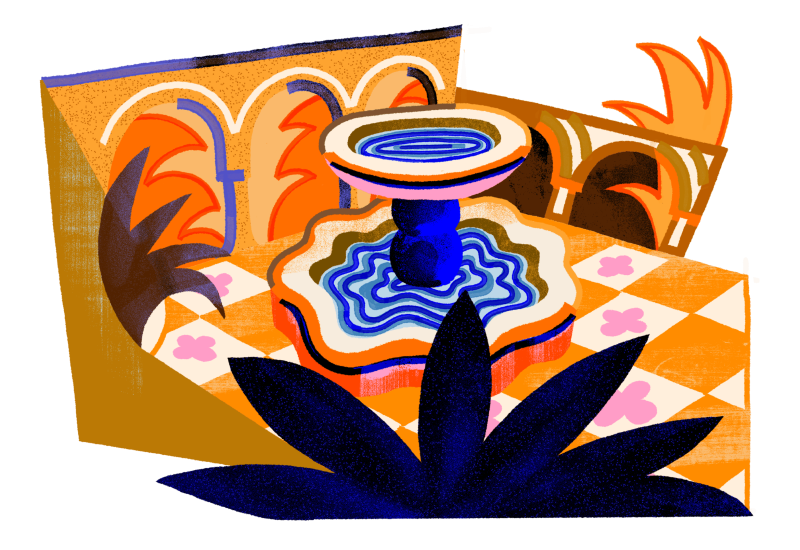
Through the Rabbit Holes
Wander into magical realms and fantastical worlds where reality is constantly redefined or questioned
Mindbenders
Provoke your survival skills. Expose yourself to danger, exciting mysteries and mindbending realities

Ourselves and Others
Explore identity and connection through the body, family dynamics and self-reflection

Should I Stay or Should I Go
Take a journey through the tension between staying and leaving, journeys of personal growth and travelogues
A Change is Gonna Come
Reflect on themes of resistance, power dynamics, and the insistence on transformation for another now
Where the Wild Things Grow
Explore our connections with ecology, rituals, the cosmos, and the pressing climate challenges of our time
Alone With the World
Portraits of the struggle to find belonging in a world that feels unfamiliar