CELA About Participants READING ROOM News and reflections Events Contact

Facebook Instagram Newsletter LinkedIn
View all filters Time After Time Passing of time Clear

Time After Time

Explore or alter the physics, the histories and the inevitability of time
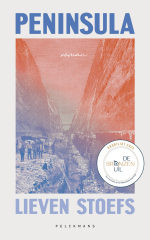
Corridoio (Peninsula)

Translated from Dutch to Italian by Matilde Soliani
Written in Dutch by Lieven Stoefs
8 minutes read

Relámpagos

Translated from Italian to Spanish by Inés Sánchez Mesonero
Written in Italian by Sara Micello
8 minutes read

Nec mergitur

Translated from Dutch to Spanish by Irene de la Torre
Written in Dutch by Simone Atangana Bekono
8 minutes read

Ființele vii

Translated from Spanish to Romanian by Oana-Dana Balaş
Written in Spanish by Mariana Torres
8 minutes read

Meine Mutter hat Blumen gezüchtet (Uslovi nisu bitni)

Ljiljana D. Ćuk’s short prose dives into the depths of human emotion, exploring a strong sense of existential despair. With a direct and uncompromising style, Ćuk reveals the struggle to make peace with a world that feels broken, where every part of reality comes with an unsettling sense of disgust. Her writing gives readers a raw and intense experience, confronting the challenge of finding meaning in a universe that seems indifferent.

"The short prose of Ljiljana D. Ćuk is not only exquisite literature, which it undoubtedly is, but also an expression of general despair, the torment of trying to come to terms with anything that exists, as everything existing is mostly seen and experienced as repulsive in itself." (Srdjan Srdić)

Written in Serbian by Ljiljana D. Ćuk
5 minutes read

Un automobil din Grecia antică

Translated from Czech to Romanian by Mircea Dan Duță
Written in Czech by Ondrej Macl
11 minutes read

Sonia levanta la mano

Translated from Romanian to Spanish by Luciana Moisa
Written in Romanian by Lavinia Braniște
6 minutes read

Trilogia sexului rătăcitor

Written in Romanian by Cristina Vremes
8 minutes read

Meine Mutter hat Blumen gezüchtet (Условията не са важни)

Translated from Serbian to Bulgarian by Tsvetomira Mladenova
Written in Serbian by Ljiljana D. Ćuk
5 minutes read

Kraj

Translated from Polish to Serbian by Milica Kozić
Written in Polish by Marta Hermanowicz
12 minutes read

De denkbeeldige werelden van Edgar Kaos

Translated from Slovenian to Dutch by Marieke Haenebalcke
Written in Slovenian by Julija Lukovnjak
12 minutes read

24

Translated from Serbian to Romanian by Virginia Popovic
Written in Serbian by Marija Pavlović
9 minutes read

Fata care aduce moartea

Translated from Czech to Romanian by Mircea Dan Duță
Written in Czech by Lucie Faulerová
11 minutes read

Um carro da Grécia antiga

Translated from Czech to Portugese by Stepanka Lichtblau
Written in Czech by Ondrej Macl
11 minutes read

Uy, nenas (It’s Both Heaven and Hell Here. Moldova: a Century of Lived History)

Translated from Romanian to Spanish by Borja Mozo
Written in Romanian by Paula Erizanu
9 minutes read

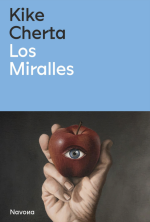
De familie Miralles

Translated from Spanish to Dutch by Lies Doms
Written in Spanish by Kike Cherta
9 minutes read

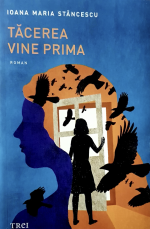
Tăcerea vine prima (Silence comes first)

Tăcerea vine prima vorbeşte despre trauma unei familii contemporane şi despre blocajele de comunicare dintre mai multe generații de femei. Atunci când tăcerea se instalează într-o familie, toate comportamentele sunt creatoare de traume. Singura soluție pare să fie depășirea fricii și deschiderea rănilor.
Subiectul principal îl reprezintă relația complicată a Dorei, pe de o parte cu mama sa intruzivă și veșnic nemulțumită, pe de altă parte cu fiica adolescentă care începe să-și ceară dreptul la independență. Crescută într-o familie în care femeile și bărbații au fost dintotdeauna într-un raport de forță, copiii au acoperit goluri și dureri, fericirea personală n-a părut necesară, mamele au îmbătrânit urât, iar tații, în tăcere, Dora preferă fantasma realității. Într-un moment de curaj, ea intră într-o relație online cu Toma. Totuși, chiar și după ce ajunge la Braşov, acolo unde locuieşte bărbatul, spaima de a nu fi dezamăgită o face să se întoarcă acasă, fără ca întâlnirea să aibă loc. Când însă, Toma vine în București și o sună, Dora este nevoită să ia o decizie. Nu înainte de a rupe tăcerea şi a da cărţile pe faţă, într-o discuţie cu mama ei.

“Silence Comes First" explores the trauma within a contemporary family and the communication barriers between multiple generations of women. When silence takes root in a family, every behavior becomes a source of trauma. The only solution seems to be overcoming fear and confronting old wounds.
The central theme is on one hand Dora's complicated relationship with her intrusive and perpetually dissatisfied mother, and on the other the dynamic with her teenage daughter, who is beginning to assert her right to independence. Raised in a family where women and men were always engaged in a power struggle, where children filled voids and covered up pain, Dora searches for an escape. After a childhood where personal happiness seemed unnecessary, where mothers aged poorly, and fathers remained silent, Dora prefers the fantasy over reality. In a moment of courage, she enters an online relationship with Toma. However, even after she travels to Brașov, where Toma lives, her fear of disappointment drives her to return home without meeting him. But when Toma comes to Bucharest and calls her, Dora is forced to make a decision. However, she can only do that after breaking the silence and laying all the cards on the table in a conversation with her mother.

Written in Romanian by Ioana Maria Stăncescu
9 minutes read

In The End (Koniec)

Metaphysical and blasphemous novel about the tragedy of war that never meets a clean end with a peace treaty. The war goes on, residing within its victims who carry it from one generation to the next.

Malwina, an exceptionally sensitive girl, experiences her grandmother’s wartime memories in her dreams. This makes her exist in two parallel realities at once: the 1940s Eastern borderlands and Siberia along the 1990s Poland. Those realities seep and bleed through one another, making Malwina a catcher of her survivor grandmother’s dreams, or perhaps a dybbuk who gives voice to the dead. To Malwina, the war persists, haunting her day and night alike. Poignant and piercing, Koniec is an impressively well-crafted prose.

Written in Polish by Marta Hermanowicz
10 minutes read

Flitsen

Translated from Italian to Dutch by Sandra Verhulst
Written in Italian by Sara Micello
8 minutes read

Žive ograde

Translated from Polish to Serbian by Milica Kozić
Written in Polish by Maria Karpińska
10 minutes read
Loading...