View all filters
Clear








Should I Stay or Should I Go
Take a journey through the tension between staying and leaving, journeys of personal growth and travelogues
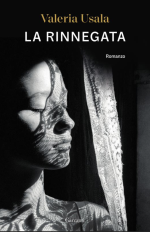
La rinnegata
A story of three generations of women, their courage and search for independence in the face of superstition and prejudice, in the spirit of Natalia Ginzburg and Elena Ferrante. In this striking debut, based on a true story, Valeria Usala bears witness to an age-old story of violence against women and takes us into the heart of rural Sardinia, where superstitions and cruelty coexist with the joys and companionship of a tight-knit community.
Teresa runs a shop and a tavern. But not even the family she has created with the man she loves can protect her from the malicious gossip of jealous locals, who are threatened by her independence. Her own mother, Maria, was made an outcast, and now Teresa is in turn forsaken by the villagers. Will she pay for her success with her life? Is she like a character in Greek tragedy, whose destiny is inevitable? A story that gives voice to the forgotten women of Sardinia—and to the one of women everywhere.
TRE!
la città in frantumi
ARRIVALS / GELIȘ (Mangiamiele)
La generazione banana: sulla doppia vita dei cinesi dei Paesi Bassi oggi
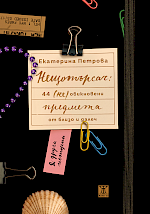
La cercacose: 44 (in)consueti oggetti da vicino e lontano
Come suggerisce il sottotitolo, il libro La cercacose contiene storie su 44 oggetti da vicino e lontano. La curiosa e variegata selezione, ordinata per temi, comprende sorprendenti chicche da tutto il mondo: stivali che arrivano dal Bhutan, mattonelle dai marciapiedi di Barcellona disegnate da Gaudí, bicchieri da vino dai Paesi Baschi, una spilla a forma di cuore da Sarajevo, espradrillas dai Pirenei, scarabei dall’antico Egitto, contenitori della spazzatura da New York, un pezzo del telo arancione proveniente dai The Floating Piers sul lago d’Iseo, un tintinnante drago sloveno, una mappa di Berlino Est e molti altri. Raccontando le storie di oggetti concreti, Ekaterina Petrova in realtà racconta anche dei luoghi da dove provengono – Küstendorf е Kathmandu, Lubiana e Louisiana, Belvedere e Bilbao, Selçuk e Central park – ponendoli contemporaneamente in un più ampio contesto linguistico, storico, antropologico e geografico. Astuta miscela fra diari di viaggio, saggi e racconti, i testi sono attentamente documentati e intessuti di aneddoti curiosi, ma inframmezzati dallo sguardo soggettivo dell’autrice, così come dalla sua personale biografia di viaggiatrice, traduttrice e cercacose. Elaborato artisticamente dall’occhio estetico di Lyuba Haleva, una delle più eminenti illustratrici bulgare contemporanee, l’impostazione grafica del libro è superba e con umorismo coglie l’anima e l’umore delle storie. In questo modo anche il libro stesso diventa un bell’oggetto carico di piacere e gioia, da leggere e rileggere, da avere e regalare.
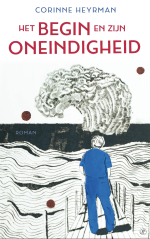
L’inizio e la sua eternità
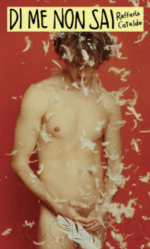
Di me non sai
Lucio falls in love with "the boy" even before meeting him: just watching him from the window of his office is enough for him to become almost obsessed. When they finally meet, he discovers that Davide is much younger than him (still studying), and that he is elusive, unreliable, and "cruel" in the way only twenty-year-olds can be cruel.
For two months, Lucio and Davide have dinner together, have sex, go to the beach, and often sleep at Lucio's place. However, Davide does not fall in love. He continues to seek Lorenzo, the only man he (perhaps) truly loved, of whom he keeps only a pixelated photo on an old cellphone. Like many twenty-year-olds, he is also confused, wounded, and willing to nestle into the routine of always having a Coca-Cola ready for him in the refrigerator.
"Di me non sai" tells the story of a relationship lived in an opposite, incompatible way, whose nature is revealed to the reader only as the novel progresses. Alternating the perspectives of the two protagonists in short, sometimes very short chapters, Raffaele Cataldo shows the misalignment of feelings and the painful consequences it can have, the slow pace of hot Apulian summers, and the obsessive loves (present and absent) that, like wild oat seeds, cling to hair, shoes, and clothes.
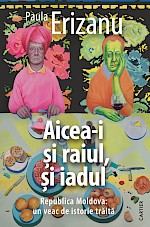
Oh, ragazze (It’s Both Heaven and Hell Here. Moldova: a Century of Lived History)
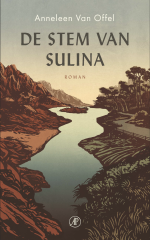
La voce di Sulina
Corridoio (Peninsula)
Caseggiati arancioni
Acquagrave